There is a moment in the Serengeti just before sunrise when the world feels suspended. The air is cool, almost sharp against the skin, and the plains stretch into darkness with only the faint outline of acacia trees breaking the horizon. The engine of the safari vehicle hums softly as you move through the quiet, headlights cutting a narrow path across the savannah.
Then the first light appears.
Not a dramatic burst, but a gradual wash of silver-blue that reveals the immensity of the landscape. The Serengeti does not wake suddenly; it unfolds.
The Sound Before the Light
Before the sun crests the horizon, you hear the bush come alive. Distant hyenas whooping at the end of a night hunt. The low rumble of wildebeest shifting in the grass. Birds beginning their morning calls from hidden perches.
There is something elemental about these sounds. They are not background noise — they are signals that the nocturnal world is giving way to daylight activity. Predators are finishing their work. Herbivores are preparing to graze.
You are witnessing the shift change of the wild.
The Light Changes Everything
As the sun rises, the plains transform. Golden light spreads across endless grasslands, catching dust particles in the air and turning them into a glowing haze. Granite kopjes emerge in warm tones. Long shadows stretch across the savannah.
The first rays illuminate a lion pride resting after a night hunt. Elephants move in silhouette, their outlines softened by early light. A lone giraffe stands against the horizon like a living sculpture.
Photography becomes effortless at this hour — but even without a camera, the visual impact is profound. The Serengeti at sunrise feels vast yet intimate at the same time.
Cool Air, Slow Breathing
The temperature at dawn is refreshingly cool, especially compared to midday heat. You feel alert. Focused. Fully present.
There is no city noise. No artificial interruption. Only wind moving lightly through grass and the distant call of wildlife.
Time slows down.
In that moment, you are not thinking about itineraries or schedules. You are simply there — surrounded by open space that stretches further than the eye can see.
Wildlife at Its Most Active
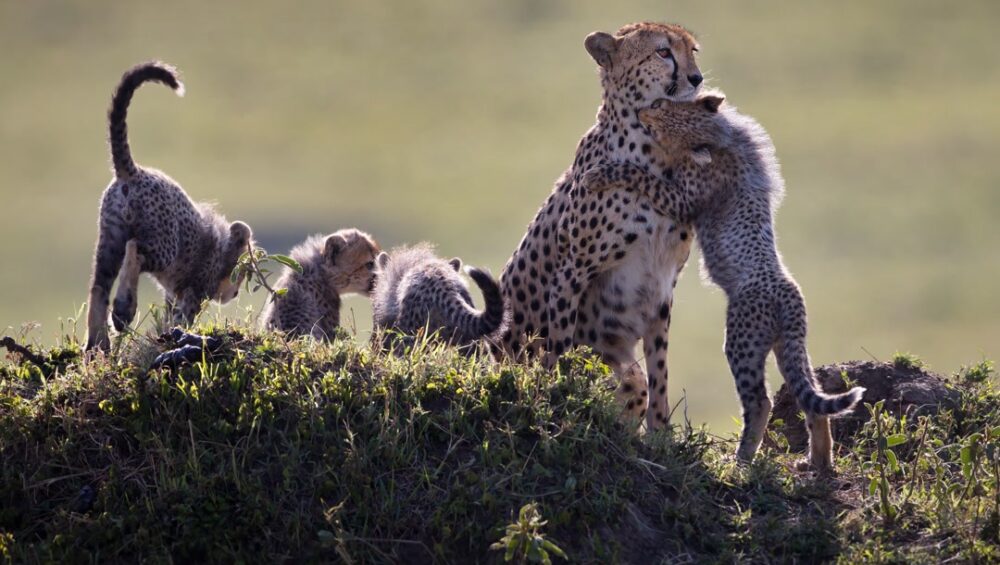
Sunrise is not only beautiful; it is strategic. Many predators are still active in the early hours. Lions patrol territories. Cheetahs scan the plains for opportunity. Leopards descend from trees after guarding a nighttime kill.
Herbivores begin grazing in open areas while visibility is still low enough to offer some protection. The balance between predator and prey feels tangible.
Every movement matters at dawn.
The Emotional Weight of It
Sunrise in the Serengeti is not dramatic in a cinematic way. It is powerful in a quieter, deeper sense.
It feels ancient.
You realize that this same sunrise has illuminated migrating herds for thousands of years. It has risen over volcanic plains, over acacia trees, over elephants walking the same routes their ancestors once followed.
Standing there, watching the light spread, you feel small — but in a grounding way. Connected to something larger and older than modern life.
The Return to Camp
As the sun climbs higher, colors shift from gold to bright daylight. Wildlife disperses into shade. The bush transitions into its daytime rhythm.
When you return to camp for breakfast, there is a sense that you have already lived a full experience before most of the world has even begun its day.
And that is what sunrise in the Serengeti really feels like.
It is not just a view.
It is a moment of stillness before the wild continues its timeless rhythm — and you are fortunate enough to witness it.