What Sunrise in the Serengeti National Park Really Feels Like

There is a moment in the Serengeti just before sunrise when the world feels suspended. The air is cool, almost sharp against the skin, and the plains stretch into darkness with only the faint outline of acacia trees breaking the horizon. The engine of the safari vehicle hums softly as you move through the quiet, headlights cutting a narrow path across the savannah.

Then the first light appears.

Not a dramatic burst, but a gradual wash of silver-blue that reveals the immensity of the landscape. The Serengeti does not wake suddenly; it unfolds.

The Sound Before the Light

Before the sun crests the horizon, you hear the bush come alive. Distant hyenas whooping at the end of a night hunt. The low rumble of wildebeest shifting in the grass. Birds beginning their morning calls from hidden perches.

There is something elemental about these sounds. They are not background noise — they are signals that the nocturnal world is giving way to daylight activity. Predators are finishing their work. Herbivores are preparing to graze.

You are witnessing the shift change of the wild.

The Light Changes Everything

As the sun rises, the plains transform. Golden light spreads across endless grasslands, catching dust particles in the air and turning them into a glowing haze. Granite kopjes emerge in warm tones. Long shadows stretch across the savannah.

The first rays illuminate a lion pride resting after a night hunt. Elephants move in silhouette, their outlines softened by early light. A lone giraffe stands against the horizon like a living sculpture.

Photography becomes effortless at this hour — but even without a camera, the visual impact is profound. The Serengeti at sunrise feels vast yet intimate at the same time.

Cool Air, Slow Breathing

The temperature at dawn is refreshingly cool, especially compared to midday heat. You feel alert. Focused. Fully present.

There is no city noise. No artificial interruption. Only wind moving lightly through grass and the distant call of wildlife.

Time slows down.

In that moment, you are not thinking about itineraries or schedules. You are simply there — surrounded by open space that stretches further than the eye can see.

Wildlife at Its Most Active

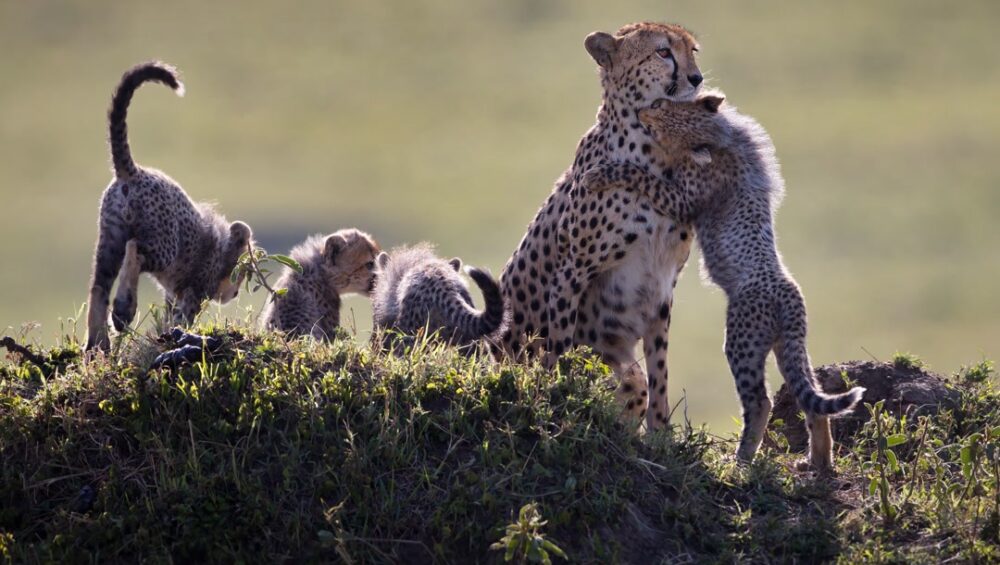
Sunrise is not only beautiful; it is strategic. Many predators are still active in the early hours. Lions patrol territories. Cheetahs scan the plains for opportunity. Leopards descend from trees after guarding a nighttime kill.

Herbivores begin grazing in open areas while visibility is still low enough to offer some protection. The balance between predator and prey feels tangible.

Every movement matters at dawn.

The Emotional Weight of It

Sunrise in the Serengeti is not dramatic in a cinematic way. It is powerful in a quieter, deeper sense.

It feels ancient.

You realize that this same sunrise has illuminated migrating herds for thousands of years. It has risen over volcanic plains, over acacia trees, over elephants walking the same routes their ancestors once followed.

Standing there, watching the light spread, you feel small — but in a grounding way. Connected to something larger and older than modern life.

The Return to Camp

As the sun climbs higher, colors shift from gold to bright daylight. Wildlife disperses into shade. The bush transitions into its daytime rhythm.

When you return to camp for breakfast, there is a sense that you have already lived a full experience before most of the world has even begun its day.

And that is what sunrise in the Serengeti really feels like.

It is not just a view.
It is a moment of stillness before the wild continues its timeless rhythm — and you are fortunate enough to witness it.
Why a Private Safari Is Worth It

A safari is not simply a trip; it is a once-in-a-lifetime immersion into one of the world’s most dynamic ecosystems. Choosing between a shared group departure and a private safari can significantly shape that experience. While group safaris offer structure and cost efficiency, a private safari offers something far more valuable: control, flexibility, and depth.

For travelers seeking a meaningful and personalized experience in Tanzania’s premier wildlife destinations such as Serengeti National Park, Ngorongoro Crater, and Tarangire National Park, a private safari often proves to be the superior investment.

Complete Flexibility of Schedule

Wildlife does not operate on fixed timetables. Lions may become active just after sunrise. A leopard sighting may require patience. A river crossing in the northern Serengeti can unfold unpredictably.

On a private safari, the day revolves around your pace. If you want to leave before dawn for golden light photography, you can. If you prefer a relaxed breakfast and later departure, that is equally possible. Extended sightings are never cut short because another guest is ready to move on.

Your safari becomes adaptive rather than fixed.

Personalized Wildlife Focus

Not all travelers prioritize the same experiences. Some guests are passionate about predator behavior; others want to photograph elephants in dramatic light. Families may focus on broader wildlife diversity, while seasoned travelers might seek rarer species or specific ecosystems.

A private guide tailors routes, tracking efforts, and daily rhythm to your interests. In areas like the Seronera Valley in Serengeti National Park, this can mean concentrating on big cats. In Tarangire National Park, it may mean spending extended time observing elephant family dynamics along the river.

The experience becomes curated rather than generalized.

Exclusive Use of the Safari Vehicle

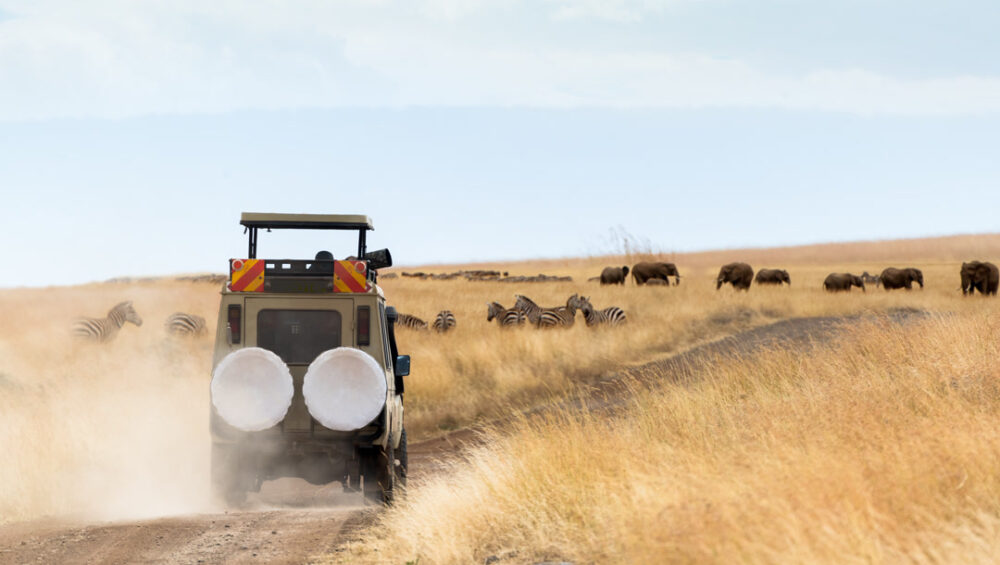
In shared safaris, seating arrangements and viewing angles are divided among multiple travelers. On a private safari, the vehicle belongs entirely to you.

This offers practical advantages:

  • Freedom to reposition for optimal photography angles
  • Unobstructed 360-degree viewing
  • Comfort and space during long drives
  • Quiet observation without competing conversations

The ability to reposition quietly around a sighting — especially during predator interactions — can dramatically enhance both viewing and photography outcomes.

Deeper Interpretation and Engagement

Professional safari guides are not only drivers; they are interpreters of ecosystems. In a private setting, guides can dedicate more time to explaining animal behavior, migration patterns, conservation challenges, and ecological relationships.

For example, descending into Ngorongoro Crater becomes more than a game drive; it becomes an exploration of a self-contained caldera ecosystem shaped by volcanic history and seasonal grazing cycles.

Without the need to balance multiple personalities or time preferences, discussions become richer and more detailed.

Greater Comfort and Privacy

A private safari provides an intimate atmosphere. Whether traveling as a couple, a family, or a group of friends, the experience remains personal and cohesive.

Conversations flow naturally. Decisions are made collectively. There is no pressure to compromise with strangers on pace, interests, or schedule.

For honeymooners or special celebrations, this exclusivity is particularly valuable.

Efficiency of Time

Time in national parks is precious. Private safaris eliminate unnecessary detours such as multiple hotel pickups or differing accommodation drop-offs. Routes are optimized for your specific itinerary.

In large ecosystems like the Serengeti, where distances are significant, efficient routing increases actual wildlife viewing hours.

More time tracking. Less time logistics.

Safety and Decision Autonomy

Experienced guides constantly evaluate road conditions, weather patterns, and wildlife proximity. On a private safari, decisions can be made instantly based on your comfort level and preferences.

If conditions require rerouting or if you prefer to avoid crowded sightings, adjustments are seamless.

The Value Perspective

While a private safari may appear more expensive upfront, the value lies in qualitative enhancement:

  • Higher quality sightings
  • Personalized pacing
  • Greater photographic opportunity
  • Deeper ecological understanding
  • Emotional connection to the experience

A safari is not a routine holiday. It is an investment in memory.

When you are traveling thousands of miles to witness the vast plains of Serengeti National Park or the dramatic descent into Ngorongoro Crater, the difference between shared and private often defines how immersive and transformative the journey becomes.

Final Thought

A private safari offers more than exclusivity. It offers intention. It allows wildlife encounters to unfold naturally, without rush or restriction, guided by expertise and shaped around your expectations.

For travelers who value depth over convenience and experience over structure, a private safari is not simply worth it — it is the standard against which all other safari experiences are measured.

How Professional Safari Guides Track Wildlife

A safari may look effortless from the passenger seat — the vehicle pauses, the engine cuts, and suddenly you are face-to-face with a pride of lions resting beneath an acacia tree. What many guests do not see is the depth of knowledge, observation, and fieldcraft that guides use to locate wildlife in vast, unfenced ecosystems. Tracking animals across landscapes like the Serengeti or Tarangire is not luck. It is skill refined through years of experience.

Professional safari guiding blends ecology, animal behavior science, landscape literacy, and real-time decision-making.

Reading the Landscape

The first principle of tracking is understanding habitat. Different species prefer different terrain, vegetation types, and water access.

In Serengeti National Park, open plains favor cheetahs and large herbivore herds, while riverine corridors attract leopards and elephants. In Tarangire National Park, permanent water sources like the Tarangire River draw wildlife during dry periods. In the Ngorongoro Crater, the enclosed ecosystem supports predictable grazing patterns.

A skilled guide studies these environmental patterns before the engine even starts. Wind direction, recent rainfall, time of year, and grass height all influence where animals are likely to be found.

Wildlife tracking begins with understanding ecosystems — not simply driving and searching.

Interpreting Tracks and Spoor

Animal footprints, known as spoor, provide critical information. Guides identify species by track shape, size, claw marks, stride length, and depth in the soil.

A lion’s rounded paw print differs distinctly from the more oval, claw-visible print of a hyena. Fresh tracks have crisp edges; older tracks soften under wind and sunlight. The direction of movement, speed (walking versus running), and even group size can often be inferred from spoor.

Dung, scent marks, scratch marks on trees, and disturbed vegetation further contribute to the story. Tracking becomes a form of reading the ground as a living record of recent movement.

Observing Animal Behavior

Wildlife tracking is not limited to physical signs. Guides constantly observe behavior patterns.

Predators such as lions and leopards are most active during cooler hours — early morning and late afternoon. Cheetahs prefer open ground with visibility for hunting. Elephants often move between feeding grounds and water in predictable rhythms.

If vultures are circling overhead, it may indicate a fresh kill. If antelope are staring in one direction and snorting alarm calls, a predator may be nearby. Baboons barking from treetops often signal a leopard’s presence.

Professional guides interpret these subtle behavioral cues in real time.

Listening to the Bush

The African wilderness communicates through sound. Alarm calls from impala, zebra, or wildebeest can reveal predator movement. The distinctive whooping of hyenas at dawn may lead to scavenging activity. Even the silence of birds in a particular patch of woodland can indicate disturbance.

Guides train their ears as carefully as their eyes.

The bush is rarely quiet without reason.

Understanding Seasonal Movements

Tracking wildlife in northern Tanzania requires deep knowledge of seasonal migration and water cycles.

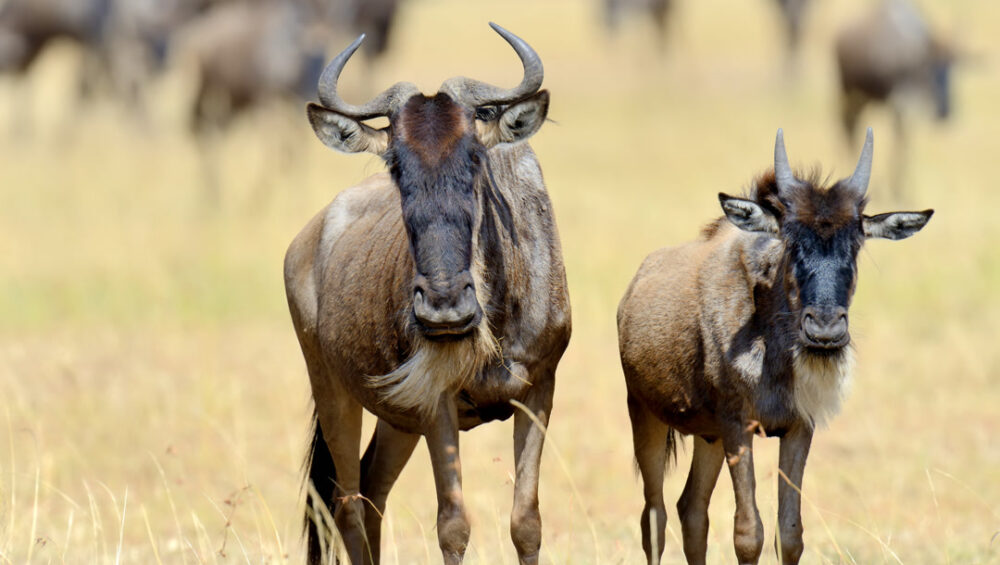
The Great Migration in Serengeti National Park follows rainfall patterns, as millions of wildebeest and zebra move in search of fresh grazing. Elephant concentrations in Tarangire National Park increase during dry months when water becomes scarce elsewhere. Resident predators adapt their territories accordingly.

Experienced guides anticipate these shifts and adjust daily routes based on broader ecological rhythms rather than relying solely on chance encounters.

Communication and Team Coordination

While tracking relies heavily on personal expertise, guides also collaborate. Within park regulations, they may communicate with other guides to share general wildlife locations. However, this is supplemental — the foundation remains individual skill and local knowledge.

A professional guide does not depend entirely on radio calls. They confirm sightings independently and evaluate conditions before approaching wildlife to ensure safety and minimal disturbance.

Patience and Positioning

Tracking wildlife is not always about moving forward. Often it requires stopping and waiting.

Positioning the vehicle downwind prevents animals from detecting scent. Approaching slowly avoids triggering flight responses. Anticipating movement paths — such as river crossings or shaded resting areas — allows guides to be in the right place before the action unfolds.

Timing and restraint are critical elements of fieldcraft.

Experience Makes the Difference

Years spent in the bush sharpen intuition. A professional guide learns to recognize patterns invisible to the untrained eye — the way vultures shift direction, the subtle nervousness in a herd, the slight indentation in tall grass where a lion may be resting.

Tracking wildlife is both science and instinct.

It requires ecological understanding, constant observation, deep familiarity with the terrain, and respect for animal behavior. The result is not simply seeing wildlife, but experiencing it in context — understanding why animals are where they are, and how the ecosystem connects.

On safari, every sighting has a story. A professional guide knows how to read it.